The best camera-based translation apps have completely transformed the way we interact with the world. First, they eliminate complex language barriers with a simple point of a phone. As a result, traveling to foreign countries or reading documents in other languages has become a much more accessible task. Furthermore, this innovative technology provides autonomy and security for global tourists and professionals.
Indeed, the evolution of these applications has been remarkable in recent years. Previously, translation depended on manually typing words, a slow and often impractical process. Now, however, you can get instant translations overlaid directly onto your camera image. Therefore, understanding signs, menus, or instruction manuals happens in real time, facilitating instant and effective communication.
How the Magic Happens: Understanding the Technology Behind Instant Translation
The technology that drives apps for translating with camera It's a fascinating combination of advanced software. First, the process begins with Optical Character Recognition, known as OCR. Basically, the camera captures an image of the text, and the OCR software identifies and digitizes the letters and words present in that image. Then, this textual information is sent to a translation engine.
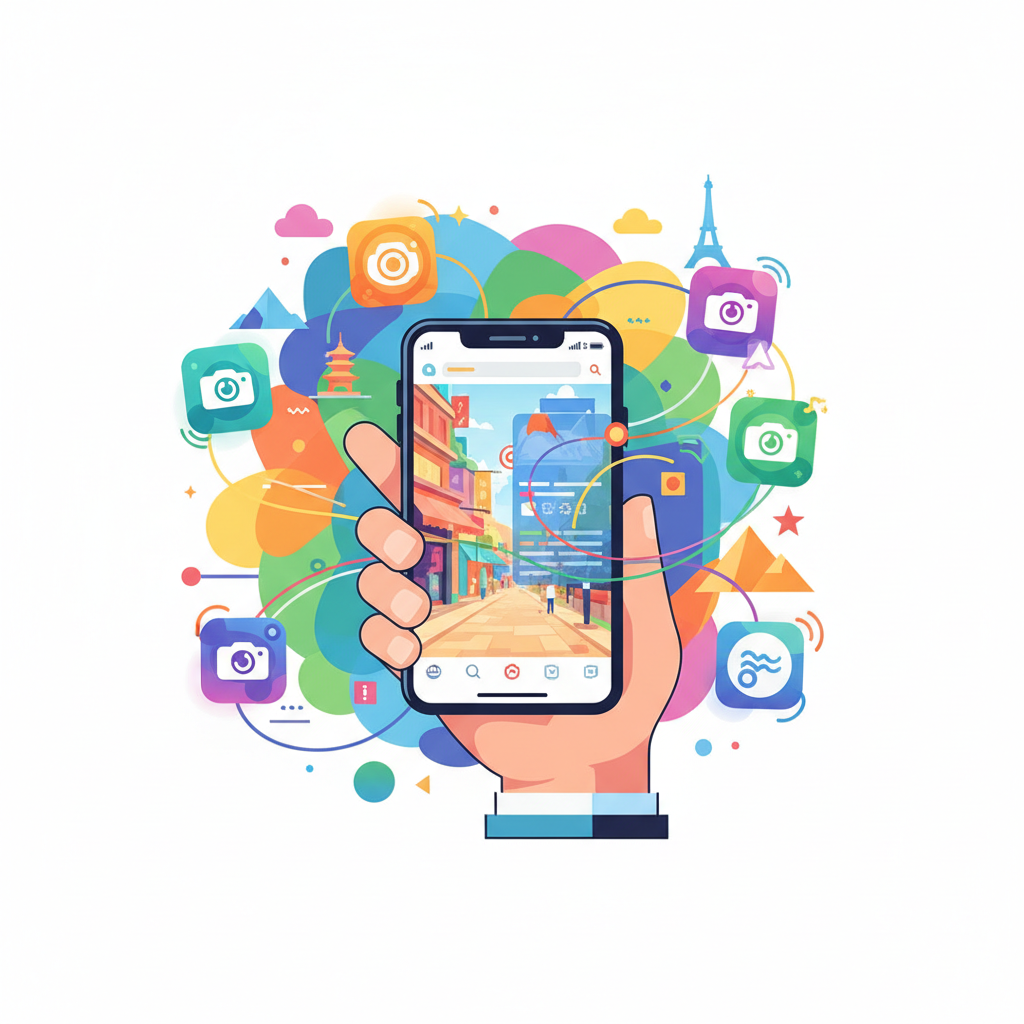
Subsequently, the translation engine, which uses artificial intelligence and neural networks, processes the digitized text. It then converts it to the target language you selected. Finally, in many applications, Augmented Reality (AR) comes into play. In this way, the translation is superimposed directly onto the original image, replacing the foreign text with the translated text in a fluid and visually integrated way, creating an almost magical experience.
Beyond Words: Advantages of Having a Visual Translator in Your Pocket
Use apps for translating with camera It offers a range of benefits that go far beyond simple convenience. First and foremost, it promotes unprecedented independence for travelers. You no longer need to rely on guides or the goodwill of strangers to decipher essential information. Consequently, exploring a new city becomes a more immersive and less stressful experience.
Furthermore, these tools are extremely useful in everyday and professional situations. Below, we list some important advantages:
- International Travel: It allows anyone translate signs Get traffic updates, restaurant menus, public transport schedules, and important notices instantly.
- Studies and Work: It makes reading books, academic articles, or work documents in other languages easier, because a good OCR translator Capture the text for further analysis.
- Shopping: It helps you understand product labels, ingredients, and instructions for use on imported packaging, ensuring you buy exactly what you need.
- Accessibility: It helps people with reading difficulties or those learning a new language to understand printed texts more quickly and interactively.
Choosing Your Pocket Translator: What to Look For in Apps
To select the best apps for translating with camera, It is crucial to analyze some important criteria. First, the accuracy of the translation is the most critical factor. A good app should offer contextual and reliable translations, not just literal word-for-word conversions. Furthermore, the number of languages supported by the camera function is essential, especially if you travel to multiple destinations.
Another crucial point is speed and performance. The app must be quick to recognize text and display the translation without significant delays. Equally important is offline functionality, as internet access can be limited or expensive while traveling. Finally, evaluate the user interface. It should be intuitive and easy to use, allowing you to access the camera function quickly and without complications.
The 5 Best Camera Translation Apps You Need to Know About
With so many options available, choosing the right tool can seem challenging. However, some apps stand out for their quality, features, and reliability. Therefore, we've compiled a list of the five best apps that use camera technology to efficiently break down language barriers. We've evaluated each one to help you find the perfect solution for your needs.
1. Google Translate (and the power of Google Lens)
Google Translate is undoubtedly the most popular and widely used tool in this category. Its camera function, enhanced by the technology of Google Lens, It is extremely powerful and versatile. The app allows for instant translations simply by pointing the camera at text. As a result, words in a foreign language are replaced in real time on your screen, creating a stunning augmented reality experience.
In addition to instant translation, Google Translate offers a "Scan" mode, where you take a photo and can manually select the text for translation. This is useful for longer texts or when you need more precision. Another strong point is the ability to download language packs for offline use, an indispensable feature for travelers. Integration with the Google ecosystem makes it a natural choice for Android users, but its performance on iOS is also excellent. It's recommended for virtually everyone, from the casual tourist to the student who needs a fast and free tool.
2. Microsoft Translator
Microsoft Translator emerges as a formidable competitor to Google, offering a robust set of features with a clean and professional interface. Its camera-based translation feature is equally effective, allowing for quick translations of signs, menus, and other printed text. The quality of the translation is frequently praised, especially for business and technical languages, due to Microsoft's strong investment in artificial intelligence.
One of its distinguishing features is the multi-device conversation mode, which allows multiple people to converse in their own languages, with the app translating for all participants. Although its camera feature is the focus here, this additional functionality adds immense value. Like Google, Microsoft Translator also offers language packs for offline use. This application is especially recommended for professionals who already use the Microsoft ecosystem, such as Office 365, and for those seeking a solid and reliable alternative to Google, with perhaps a more organized interface.
3. iTranslate Translator
iTranslate positions itself as a more premium solution, offering a polished design and advanced features, many of which are available in its Pro version. Its "Lens" function, its camera-based translation feature, is fast and accurate. It works similarly to competitors, using augmented reality to overlay the translation onto the live image. The app supports a wide range of languages and is known for the high quality of its translations.
The key differentiator of iTranslate lies in its paid features, such as complete offline translations, verb conjugation, and real-time voice translations. Therefore, it's ideal for users who require maximum reliability and are willing to invest in a more comprehensive tool. If you are a frequent traveler, an expatriate, or a business professional who relies on accurate translations daily, an iTranslate Pro subscription can be an excellent investment to ensure flawless communication.
4. Waygo
Unlike general-purpose apps, Waygo is a highly specialized tool focused exclusively on Asian languages: Chinese, Japanese, and Korean. Its biggest advantage is that it was designed from the start to work completely offline, without needing an internet connection. This makes it extremely reliable for those traveling through regions where network access may be unstable or expensive. It's one of the best. apps for translating with camera for those visiting East Asia.
Waygo is acclaimed for its accuracy in recognizing complex characters, something where general-purpose translators can fail. It is perfect for translate signs Whether you're deciphering ideograms or reading local restaurant menus, the free version offers a limited number of daily translations, but purchasing the full version guarantees unlimited use. Therefore, if your destination is China, Japan, or Korea, Waygo is undoubtedly the smartest and most reliable choice to have in your pocket.
5. Yandex Translate
Yandex Translate, developed by the Russian tech giant, is a powerful and often underrated alternative in the world of translators. Its image translation feature is robust, allowing users to take a picture of text and receive a detailed translation. While real-time AR translation isn't as fluid as Google Translate, its text recognition capabilities make it a great tool. OCR translator, It's impressive.
Where Yandex truly shines is in the quality of its translations, especially for Eastern European languages like Russian. Furthermore, it offers a complete and free offline mode, allowing you to download dozens of languages at no cost. The interface is clean and functional, focused on delivering accurate translations quickly. This application is recommended for those seeking a solid alternative to the Google/Microsoft axis, especially for travelers exploring Russia and neighboring countries, or for anyone needing a free and reliable offline mode.
Translation in Practice: Your Step-by-Step Guide to Using These Apps
Use the apps for translating with camera It's a surprisingly simple and intuitive process. By following a few basic steps, you can start breaking down language barriers in seconds. First, make sure you have the app installed and camera permissions granted. Then, follow this quick guide:
- Open the app: Launch your chosen translation app and locate the camera icon or the "Translate with Camera" option.
- Select the Languages: Define the source language (the language of the text you want to translate) and the target language (the language you want to translate to). Many apps detect the source language automatically.
- Point the Camera: Frame the text you want to translate, whether it's a sign, a menu, or a page from a book. Try to keep your phone steady and the text well-lit.
- Please wait for the instant translation: For apps with augmented reality, the translation will appear overlaid on the original text on the screen in real time.
- Use Photo Mode (Optional): If the text is long or the instant translation isn't clear, use the option to take a photo. The app will analyze the image and allow you to select the specific text for a more detailed translation.
Maximizing Accuracy: Professional Tips for Perfect Translations
Although technology is advanced, some best practices can significantly improve the quality of your translations. After all, the performance of a good translator depends on the quality of your work. OCR translator It depends on the clarity of the captured image. First and foremost, lighting is crucial. Therefore, ensure the text is well-lit and free of harsh shadows, as this helps the camera recognize the characters more accurately.
Furthermore, keep your phone as parallel as possible to the text surface. Odd angles can distort the letters and confuse the recognition software. If the app allows, use zoom to focus on a specific section of the text, preventing the app from trying to translate everything around it. Finally, a golden tip: before traveling, download the language packs you will need. This way, you ensure that your apps for translating with camera They will work perfectly, even without internet access.
Frequently Asked Questions (FAQ)
Is camera translation always 100% accurate?
No, accuracy can vary. Although the technology is very advanced, factors such as stylized fonts, handwriting, low lighting, or poor angles can lead to errors. It's excellent for getting the overall context, but for important documents, it's always good to seek a second check.
Do these apps work without internet?
Yes, most major apps, such as Google Translate and Microsoft Translator, allow you to download language packs for offline use. This is essential for travelers, as it ensures camera translation functionality even in locations without Wi-Fi or cell phone signal.
What is the difference between Google Lens and Google Translate?
O Google Lens Lens is a broader visual recognition technology that can identify objects, plants, animals, and text. Google Translate integrated Lens technology specifically for its camera-based translation function. In short, Lens is the engine that powers Translate's visual translation capability.
Is it safe to use camera-based translation apps for sensitive documents?
Caution is advised. When using an online application, image data may be sent to the company's servers for processing. For confidential or private documents, it is best to use an application that works offline or avoid photographing sensitive information.
Can I use these apps to translate text in videos?
Real-time translation is designed for static text. For videos, the most practical approach is to pause the video at a frame containing the text, take a screenshot, and then import that image into the translation app. This works well for subtitles or text that appears on the screen.
Conclusion
In short, the apps for translating with camera They represent a true revolution in global communication. They break down barriers that previously seemed insurmountable, empowering anyone with a smartphone to navigate the world with more confidence and autonomy. Whether for translate signs Whether navigating an unfamiliar street in Tokyo or deciphering a restaurant menu in Paris, these tools have become indispensable travel companions.
The combination of a powerful OCR translator Augmented reality has transformed what was once science fiction into a practical and accessible tool. By choosing one of the highlighted options, such as the versatile Google Translate or the specialized Waygo, you carry a key to countless cultures in your pocket. So, the next time you encounter a foreign language, remember that the solution is just a tap away.